

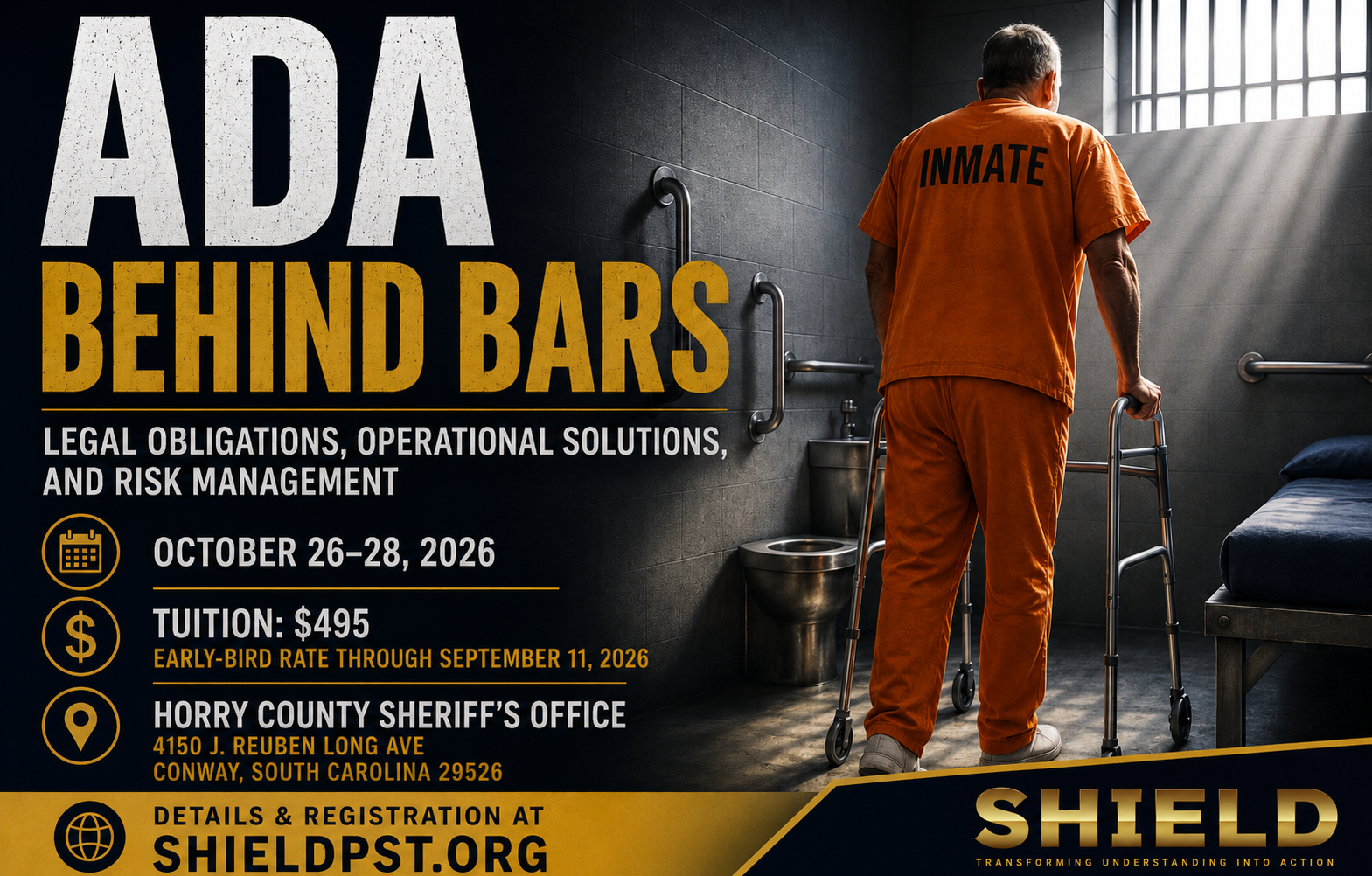
National Correctional ADA Symposium
ADA Behind Bars
Legal Obligations, Operational Solutions, and Risk Management
Hosted by the Horry County Sheriff’s Office at the J. Reuben Long Detention Center
Dates
October 26–28, 2026
Location
4150 J. Reuben Long Ave.
Conway, South Carolina 29526
Enrollment
Only 50 seats — filling fast
ADA compliance affects virtually every area of jail operations, including intake, classification, housing, discipline, medical and behavioral-health care, medication-assisted treatment, restrictive housing, use of force, communication access, grievances, emergency planning, release planning, and vendor oversight.
This intensive 2.5-day program is designed to help correctional professionals understand the legal requirements of Title II of the Americans with Disabilities Act and translate those requirements into practical, defensible operational systems.
The symposium is designed for jail administrators, command staff, supervisors, ADA coordinators, medical and behavioral-health professionals, risk managers, legal advisors, training personnel, classification staff, and others responsible for correctional operations and ADA compliance.
Every Attendee Receives an Individualized ADA Self-Assessment
ADA Behind Bars goes beyond classroom instruction. Every attendee will receive a comprehensive correctional ADA self-assessment designed to help evaluate how the attendee’s agency currently addresses ADA compliance throughout its jail operations.
The assessment examines important operational areas where disability law and correctional practice intersect. It is designed to help agencies identify existing strengths while also recognizing practices, policies, procedures, training issues, or documentation that may deserve additional attention.
After the completed self-assessment is returned to Shield Public Safety Training, Shield will review and analyze the information and prepare an individualized written report based upon the agency’s responses.
The self-assessment process includes:
- A comprehensive correctional ADA self-assessment covering critical areas of jail operations;
- Review and analysis of the completed assessment by Shield Public Safety Training;
- An individualized written report identifying strengths, potential gaps, and areas deserving additional review;
- Practical observations to assist the agency in prioritizing ADA compliance efforts; and
- A 30-minute telephone consultation to discuss the findings, answer questions, and review potential next steps.
Take the Tools Home With You
Understanding the legal requirements is only part of effective ADA compliance. Agencies also need practical tools that help translate those requirements into day-to-day correctional operations.
Exclusive ADA Resource Library
Symposium attendees will receive exclusive access to Shield’s correctional ADA resource library containing checklists, templates, sample documents, practical compliance tools, and other materials developed to assist correctional agencies with ADA implementation.
Practical Compliance Resources
These resources are designed for continued use after the symposium and can assist agencies as they evaluate policies, review operations, train personnel, document accommodations, improve internal processes, and develop more defensible ADA compliance systems.
Access to these materials is reserved for ADA Behind Bars attendees. They are intended to provide participants with a continuing resource after the live program concludes.
What the Symposium Will Address
ADA compliance in a correctional environment requires more than a written policy. It requires coordination among custody personnel, medical and behavioral-health professionals, classification staff, supervisors, administrators, contractors, agency leadership, and others whose decisions affect incarcerated people with disabilities.
The symposium will examine the legal requirements and, equally important, how agencies can translate those requirements into workable correctional practices.
- Title II ADA obligations in correctional facilities;
- Identifying disabilities and accommodation needs;
- Intake, screening, classification, and housing decisions;
- Effective communication and auxiliary aids and services;
- Mobility disabilities and accessible housing;
- Medical and behavioral-health considerations;
- Medication-assisted treatment and substance-use disorders;
- Discipline and restrictive housing;
- ADA considerations involving use of force and restraints;
- Access to programs, services, and activities;
- Grievance and accommodation processes;
- Emergency planning and evacuation;
- Release planning and continuity of care;
- Vendor and contractor oversight;
- Policy development, documentation, training, and supervision;
- Risk management and litigation avoidance; and
- Building an agency-wide ADA compliance framework.
Faculty
ADA Behind Bars brings together experienced professionals from law, corrections, jail administration, disability compliance, training, and correctional operations.
Retired Assistant Sheriff
Retired Assistant Sheriff
Registration
Early Bird Tuition: $495
Register on or before September 11, 2026.
Regular Tuition: $595
Applies after September 11, 2026.
Agency Tuition: $425 per person for 3 or more attendees
Registration includes the 2.5-day symposium, program materials, access to the attendee-only ADA resource library, the individualized ADA self-assessment, Shield’s analysis and written report, and a 30-minute consultation regarding the assessment results.
Enrollment is limited to only 50 participants to preserve the interactive nature of the program.
More Than a Conference
ADA Behind Bars is structured as a working symposium rather than a traditional lecture-only program. Attendees will examine how ADA requirements intersect with actual correctional operations and leave with resources they can apply within their own facilities.
The program combines live instruction with practical compliance tools, an individualized agency self-assessment, Shield’s written analysis, a 30-minute consultation, and continuing access to attendee-only ADA resources.
The objective is not simply to identify what the ADA requires. It is to help correctional agencies build practical, sustainable, and defensible systems for meeting those obligations.
Only 50 seats available. Reserve your place now before enrollment closes.
Tuition
$495
Early-bird rate
Through September 11, 2026
$595
Regular rate
Beginning September 12, 2026
$425 per attendee
Agency rate
Three or more attendees from the same agency
Event details
Location:
Horry County Sheriff’s Office: J. Reuben Long Detention Center
4150 J. Reuben Long Ave.
Conway, South Carolina 29526
Registration includes
- Admission to all symposium sessions
- Lunch on October 26 and October 27
- Electronic training materials provided before the conference
- Certificate of completion
- Faculty question-and-answer sessions
Who should attend
This symposium is designed for professionals who manage, advise, insure, defend, evaluate, or oversee correctional operations, including:
- Sheriffs, jail administrators, detention-center directors, and command staff
- Correctional supervisors, intake personnel, and classification personnel
- ADA coordinators and compliance professionals
- Medical, mental-health, and behavioral-health professionals
- Agency counsel, county attorneys, and civil-rights attorneys
- Risk managers, insurance pool representatives, claims professionals, and loss-control personnel
- Internal affairs, professional standards, training, and policy personnel
- Healthcare-vendor managers and government officials responsible for detention operations
Program focus
- ADA Title II in correctional settings
- Intake, screening, classification, and accommodation planning
- Physical access, mobility devices, sensory disabilities, IDD, TBI, and mental illness
- Restrictive housing, discipline, suicide prevention, crisis response, and use of force
- Medication-assisted treatment, opioid use disorder, and continuity of care
- Emergency planning, release planning, reentry, grievances, and the ADA Coordinator
Selected faculty
James E. “Jeb” Brown, Esq.
John G. Peters, Jr., Ph.D.
Marcus Rhodes
Mitch Lucas
Kathleen Totemoff
Additional faculty assignments will be announced as they are confirmed.
Reserve your place early
Enrollment is limited to the first 50 attendees. Registration will close when capacity is reached, so agencies and individual attendees are encouraged to secure their places as early as possible.
Faculty assignments and program sequencing are subject to change. Attendees should bring a laptop or tablet to access electronic materials during the program.