


Upcoming Events
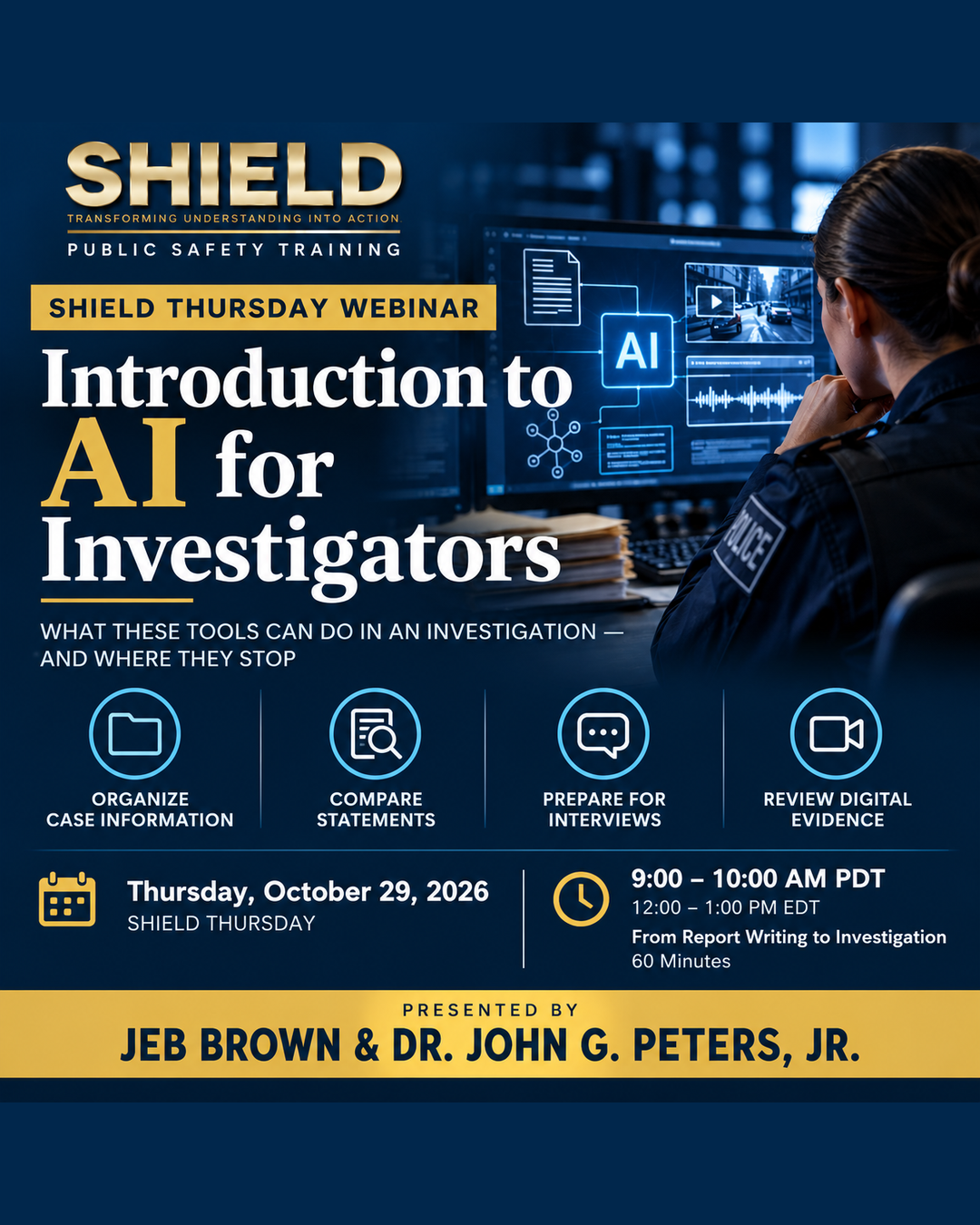
Introduction to AI for Investigators
This one-hour Shield Thursday webinar introduces how artificial intelligence can support investigative work, including organizing case information, comparing statements, preparing for interviews, and reviewing digital evidence. The program also examines accuracy, privacy, confidentiality, verification, legal and policy concerns, and the limits of AI-assisted investigation.
AI for Investigators: Practical Applications for Criminal and Administrative Investigations
AI for Investigators
Practical Applications for Criminal and Administrative/Internal Investigations
Learn how AI platforms can help you organize information, review reports, prepare for and conduct interviews, and work with audio, photographs, and video. Then apply what you learn to a realistic mock case file.
Register Now → View Training CalendarRegister early and secure your seat.
Per attendee when registered by October 30, 2026.
Per attendee beginning October 31, 2026.
Three attendees from the same agency through October 30. The three-person rate is $1,585 beginning October 31. Additional attendees from the same agency are $395 each.
Registration includes
Learn to use AI as part of your investigative work.
AI can help you organize information, build timelines, compare accounts, identify unanswered questions, prepare interviews, review photographs and video, and plan investigative next steps. It can also make mistakes, overlook important information, or present unsupported conclusions.
This is an introductory program into the use of AI for investigations. It explains what AI can and cannot do and shows you how to check its work. Day 1 introduces AI platforms and practical investigative uses. During Days 2 and 3, you will apply those skills to one mock case involving both criminal and administrative/internal investigations.
What you will learn
No prior AI experience or programming knowledge is required. You will learn how to:
- Understand what AI can and cannot do during an investigation.
- Draft clear prompts to assist with investigative tasks.
- Use AI platforms to organize and review case information.
- Build and check investigative timelines.
- Compare reports, statements, audio, photographs, and video.
- Identify missing information and questions requiring follow-up.
- Prepare for and conduct interviews.
- Apply AI tools during criminal and administrative/internal investigations.
- Recognize inaccurate, incomplete, or unsupported AI results.
- Check AI results against the original information.
- Protect confidential and sensitive information.
- Document how AI was used during an investigation.
Work through a realistic mock case file.
You will receive case information in stages and use it throughout the hands-on exercises.
Three days of guided, hands-on learning
Foundations, Tools & Investigative Methods
Welcome, Orientation & the Mock Investigation
Course goals, faculty introductions, an overview of the mock case, and how the practical exercises will work.
How AI Can Help With an Investigation
A plain-language introduction to AI platforms, common investigative uses, basic limitations, and the investigator’s continuing responsibility.
AI Concerns During Investigations
Inaccurate answers, made-up information, missed information, bias, privacy, confidentiality, security, discovery, and record preservation.
Drafting Prompts to Assist Your Investigation
Learn how to tell an AI platform what information to review, what task to perform, and how to present the result.
Using AI for Multi-Step Investigative Tasks
Learn how to divide a larger assignment into manageable steps, check the work at each stage, and keep the investigator in control.
Introduction to AI Platforms for Investigations
Learn how AI platforms can help organize reports, transcripts, policies, and other case information—and how to check the answers against the original material.
AI-Assisted Video & Image Analysis
Learn how AI may help review body-worn-camera footage, surveillance video, and photographs; locate relevant portions; compare recordings with reports; and identify items requiring human review.
Working the Mock Case: Organizing Information and Planning the Investigation
Case Briefing & Team Assignments
Receive the mock case file, review the initial information, establish team roles, and learn the rules for using and documenting AI.
Practical 1: Organizing the Case Information
Review and organize the case materials, identify missing items, record the sources, and outline the first investigative steps.
Practical 2: Building the Case Timeline
Use reports, dispatch information, 911 audio, and video to place events in order, check differences in timing, and identify questions requiring follow-up.
Practical 3: Comparing Reports, Statements & Other Information
Compare accounts, recordings, photographs, and records to identify agreements, differences, and unanswered questions.
Practical 4: The Investigative Plan
Decide what should happen next and prioritize interviews, records, video, follow-up contacts, and tasks requiring direct human investigation.
Practical 5: The Interview
Prepare questions, conduct a mock interview, assess the new information, and identify necessary follow-up.
Faculty Review & New Case Information
Compare approaches, discuss helpful and inaccurate AI results, and receive additional information for Day 3.
Criminal & Administrative/Internal Investigations: Same Tools, Different Rules
Using AI in Criminal and Administrative/Internal Investigations
Learn how the same AI tools can assist both types of investigations while respecting their different purposes, legal requirements, and information-handling rules.
Practical 6: Keeping the Investigations Separate
Using the mock case, decide what information may be used in the criminal investigation, what may be used in the administrative/internal investigation, and what must remain separate. Then prepare separate next-step plans for each investigation.
Practical 7: Preparing Investigative Work Products
Use AI to assist with selected products such as a verified timeline, interview plan, investigative summary, status report, and list of remaining tasks. Every item must be checked against the original information.
Team Presentations & Case Review
Explain your investigative approach, how AI was used, which results were corrected or rejected, and what work remains.
Bringing AI Into Your Agency
Appropriate uses, human review, confidentiality, information security, documentation, supervision, policy, training, and final lessons.
Use AI—and keep the investigator in control.
Every exercise reinforces accuracy, confidentiality, proper information handling, and human review.
Legal, investigative, training and decision-making experience
The faculty combine public-safety law, investigations, training, human performance, use-of-force analysis, decision-making, and responsible use of AI.
James E. “Jeb” Brown, Esq.
President · Shield Public Safety TrainingAttorney representing law-enforcement agencies for more than 30 years, with extensive experience in constitutional policing, internal affairs, administrative investigations, policy, training, civil liability, and emerging public-safety technology.
John G. Peters, Jr., Ph.D.
Co-Founder · Shield Public Safety TrainingNationally recognized law-enforcement trainer, author, consultant, and expert whose work addresses use of force, human performance, instructor development, policy, decision-making, and public-safety operations.
John R. Black, D.B.A.
President · Aragon National, Inc.Retired law-enforcement lieutenant with more than 23 years of experience in patrol, investigations, corrections, training, and command. His work includes use-of-force analysis, administrative review, video analysis, sensemaking, systems thinking, and decision-making.
Designed for personnel who investigate, supervise, review, train or advise
No AI experience or programming background is required. You must bring a laptop computer capable of downloading information.
- Criminal investigators and detectives
- Internal affairs and professional standards investigators
- Use-of-force and officer-involved-shooting investigators
- Investigative supervisors and command staff
- Digital-media and body-worn-camera personnel
- Agency counsel, prosecutors and municipal attorneys
- Training and policy staff
- Risk-management and technology personnel
Learn it. Apply it. Take it back to your agency.
Enrollment is limited to preserve the hands-on format, small-group exercises, and direct interaction with the instructors.
Program content, practical-exercise materials, and agenda sequencing are subject to refinement. AI platforms and capabilities may change before the program. You remain responsible for complying with applicable law, agency policy, confidentiality requirements, information-handling requirements, and approved technology-use rules.
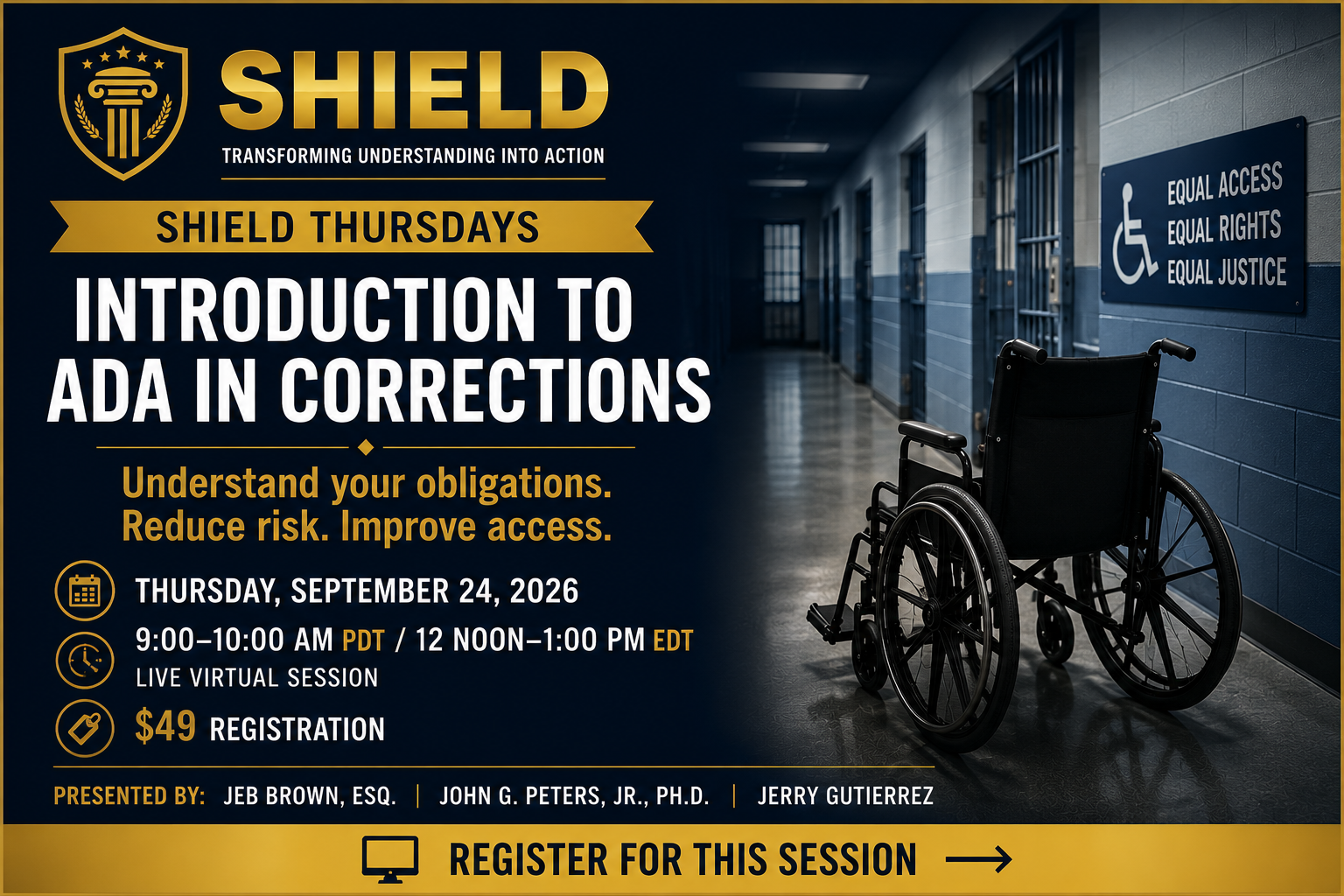
Introduction to ADA in Corrections
A practical, one-hour introduction to ADA compliance in jails and correctional facilities — what Title II requires, where agencies commonly fall short, and how those gaps become liability. Presented by Jeb Brown, Esq., John G. Peters, Jr., Ph.D., and Jerry Gutierrez. Attendees receive a $100 discount code toward Shield's ADA Behind Bars symposium in Conway, SC.
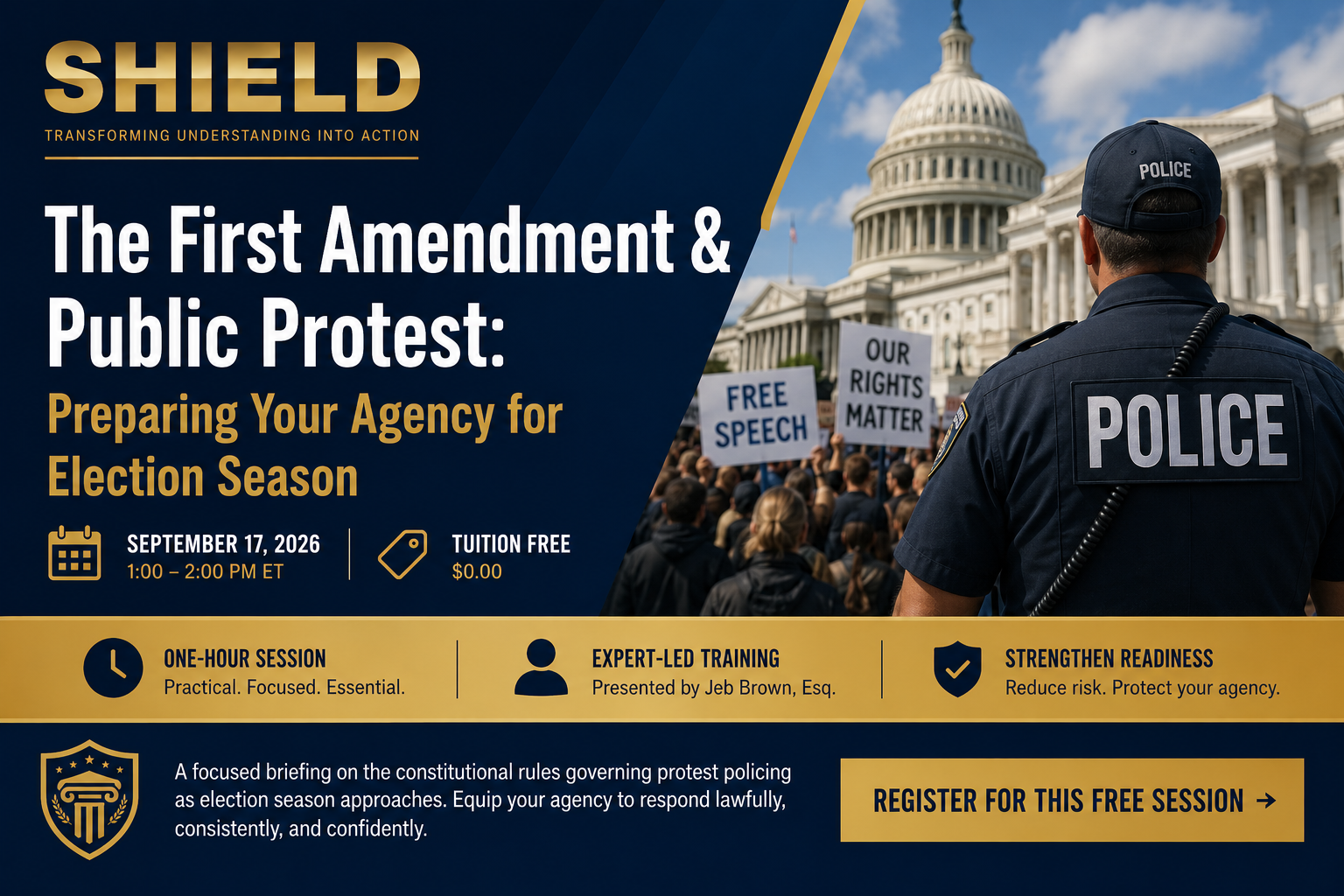
The First Amendment & Public Protest: Preparing Your Agency for Election Season
September 17, 2026 · Tuition Free
The First Amendment & Public Protest: Preparing Your Agency for Election Season
With the November election approaching, agencies nationwide should expect a rise in campaign rallies, counter-demonstrations, polling-place activity, and post-election protest — and with it, a rise in First Amendment liability exposure. A single mishandled protest during election season can generate national media attention, DOJ scrutiny, and civil litigation that follows an agency for years.
This one-hour training, presented by Shield President Jeb Brown, Esq., delivers a focused, practical overview of the constitutional framework governing protest policing and the specific issues election-season demonstrations tend to raise: content-neutral enforcement, counter-protester management, retaliatory arrest exposure, lawful dispersal, mass-arrest decisions, and documentation.
Election-related demonstrations present particularly difficult operational challenges because officers are often required to make rapid decisions while opposing groups, political candidates, media representatives, observers, and members of the public are all exercising constitutionally protected rights in the same environment. The legal consequences of inconsistent enforcement can be significant.
This program focuses on helping agencies distinguish between protected expression and conduct that may lawfully be restricted, while also identifying the policies, supervisory practices, and documentation that can reduce unnecessary constitutional exposure.
Participants Will Learn
- The constitutional framework governing speech, assembly, and protest at rallies, polling places, streets, sidewalks, and government buildings
- How the public-forum doctrine affects an agency's ability to regulate the time, place, and manner of demonstrations
- Why content neutrality is essential — and how selective enforcement can create immediate First Amendment liability
- How to distinguish permissible public-safety restrictions from restrictions based on the message, viewpoint, or identity of the speaker
- The retaliatory-arrest standard after Nieves v. Bartlett and Gonzalez v. Trevino, and why enforcement consistency and officer decision-making matter
- How to lawfully manage counter-protesters without creating a constitutionally impermissible heckler's veto
- The legal considerations surrounding protest zones, buffer areas, pedestrian restrictions, street closures, and separation of opposing groups
- When dispersal may be appropriate and what agencies should consider before issuing a dispersal order
- The importance of clear warnings, reasonable opportunity to comply, command authorization, and documentation before enforcement begins
- Legal and operational considerations associated with mass arrests during election-related demonstrations
- Why contemporaneous documentation, video preservation, command decision logs, and enforcement consistency can become critical evidence in subsequent litigation
Why This Matters Now
Election season creates an unusually compressed environment for constitutional decision-making. Agencies may encounter campaign events, political rallies, demonstrations near government facilities, counter-protests, election-related marches, activity near polling locations, and rapidly developing demonstrations following election results.
These incidents can draw intense public and media scrutiny. Decisions involving arrests, dispersal, crowd separation, protest restrictions, or differing treatment of opposing groups may later be examined frame by frame in litigation. Preparation before the event is therefore as important as the decisions officers make in the field.
Who Should Attend
This program is designed for police chiefs, sheriffs, command staff, patrol officers, patrol supervisors, field force members, tactical team members, internal affairs commanders, public information officers, agency trainers, risk managers, and municipal or agency counsel responsible for election-season planning, protest response, and constitutional compliance.
Presented By
James E. “Jeb” Brown, Esq.
President, Shield Public Safety Training; attorney representing law enforcement agencies for more than 30 years.
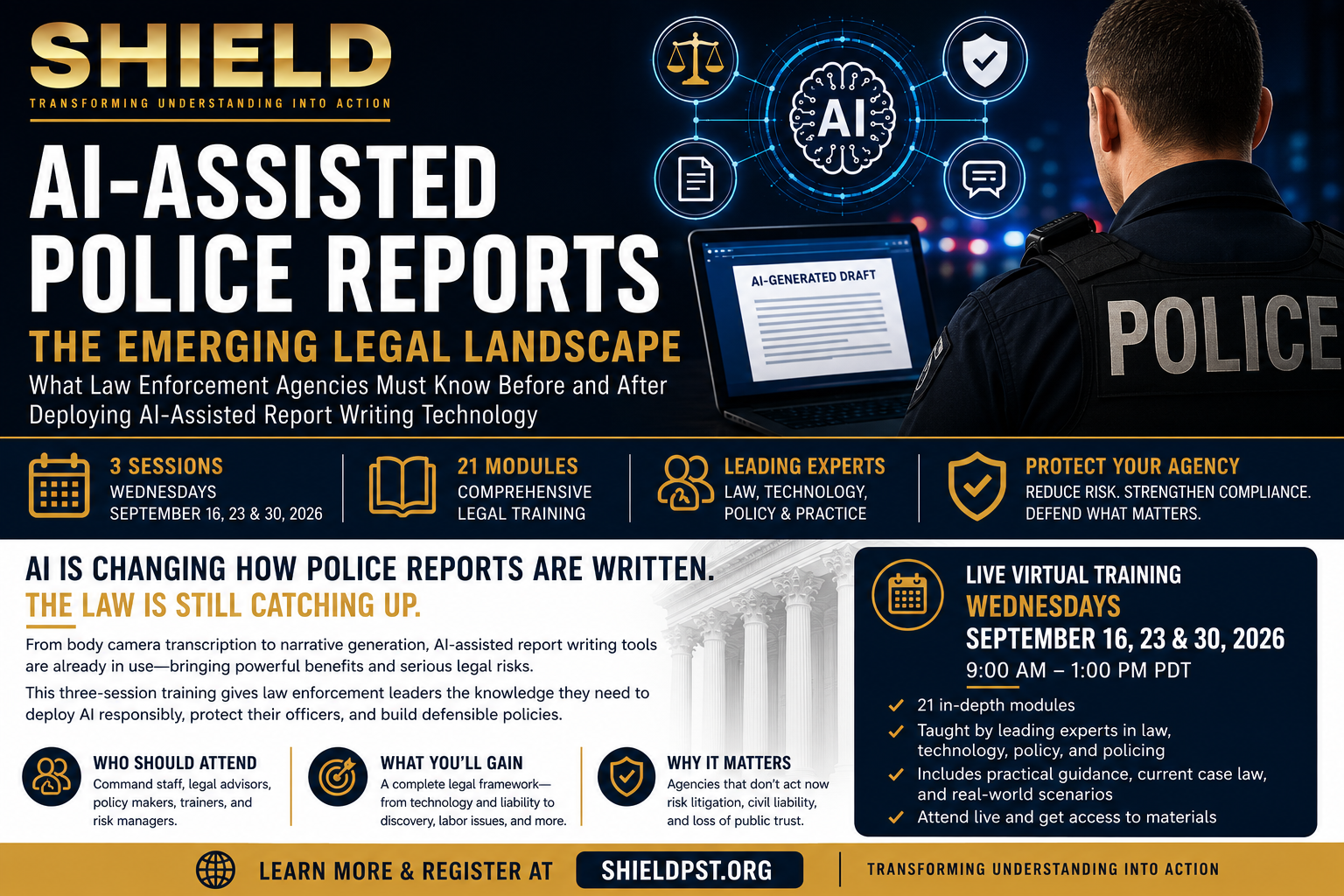
AI-Assisted Police Reports: The Emerging Legal Landscape (3 Consecutive Wednesdays, 9/16, 23, 30)
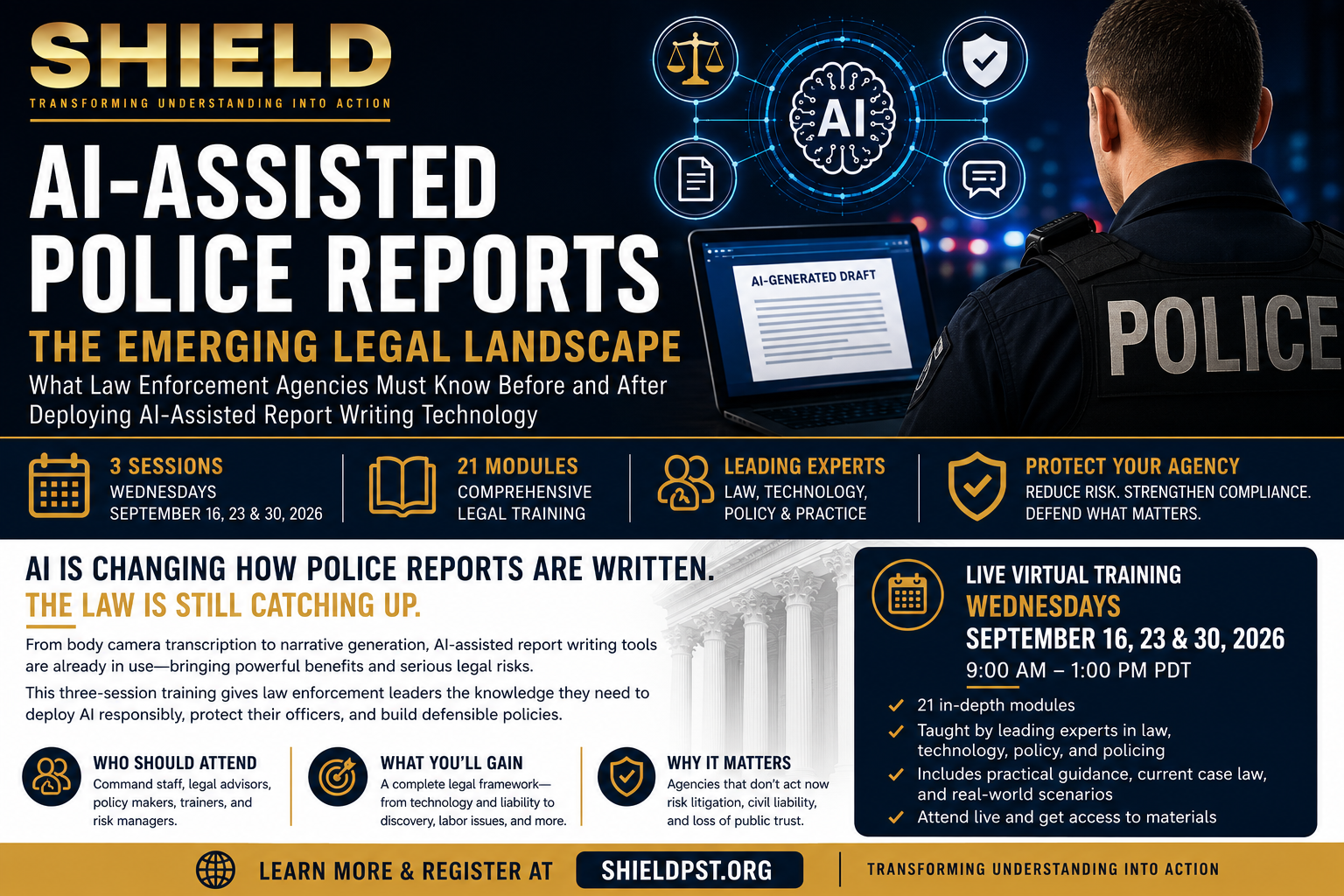
AI-Assisted Police Reports:
The Emerging Legal Landscape
AI-assisted report-writing technology can reduce administrative workload and accelerate report preparation. It can also introduce inaccurate facts, omit critical information, distort witness statements, create conflicts with body-worn camera footage, and expose agencies to new discovery, evidentiary, labor, privacy, disciplinary, and civil-liability risks.
Program Overview
AI-assisted report-writing technology is already changing how law-enforcement agencies document incidents. The operational benefits are real. So are the legal, evidentiary, supervisory, labor, privacy, and risk-management questions.
This comprehensive live virtual program examines the full lifecycle of an AI-assisted police report—from the technology that generates the first draft through officer verification, supervisory review, records retention, discovery, internal affairs, courtroom testimony, policy development, training, and agency implementation.
Presented in three four-hour sessions, the program includes 21 focused modules addressing the issues agencies must confront now—not after an AI-generated report becomes the subject of a suppression motion, Brady demand, public-records request, disciplinary investigation, or civil lawsuit.
Registration and Tuition
Sending an agency team allows command, legal, training, supervision, records, technology, and risk-management personnel to receive the same guidance and begin developing a coordinated implementation strategy.
Faculty
This intensive three-part program brings together attorneys, law-enforcement executives, policy specialists, trainers, and nationally recognized subject-matter experts to examine the legal, operational, evidentiary, supervisory, and policy implications of AI-assisted police reporting.
Program Schedule
Technology, Risk & Constitutional Foundations
How AI-assisted report-writing tools work and why different systems create different risk profiles. Topics include hallucinations, transcription failures, bias, unauthorized “shadow use,” the gap between AI-generated drafts and final reports, officer verification, supervisory responsibility, municipal liability, discipline, and command-level risk.
Evidence, Discovery & Emerging Disclosure Obligations
Brady and Giglio obligations, preservation of AI drafts and metadata, spoliation, public-records requests, authentication, chain of custody, Franks challenges, confrontation issues, victim privacy, CJIS compliance, internal affairs investigations, prosecutorial ethics, and post-conviction exposure.
Labor, Courtroom Practice, Policy & Agency Action
Labor-relations and meet-and-confer obligations, ADA and disability-related documentation issues, civil and criminal trial strategies, officer testimony, cross-examination, policy development, officer and supervisor training, phased deployment, auditing, emerging standards, and the next generation of AI-related litigation.
What Participants Will Learn
Technology & Verification
- Evaluate the legal and operational risks of specialized and general-purpose AI tools.
- Establish meaningful officer-verification and attestation requirements.
- Create supervisory-review protocols that go beyond grammar and formatting.
- Prepare officers to testify accurately about their use of AI.
Evidence & Disclosure
- Preserve AI drafts, metadata, audit logs, and vendor records.
- Respond to Brady, Giglio, discovery, public-records, and litigation demands.
- Protect confidential victim, juvenile, disability-related, and criminal-justice information.
Labor, Policy & Governance
- Address labor and meet-and-confer obligations before deployment.
- Develop defensible policies, training programs, auditing systems, and vendor safeguards.
- Identify what prosecutors and agency counsel need to know about AI-assisted reports.
Risk Reduction
- Identify what agency policies, contracts, and training programs must address.
- Reduce the risk of suppression, discipline, credibility findings, civil liability, and reputational harm.
- Build a coordinated implementation strategy across agency functions.
Who Should Attend
This program is designed for personnel responsible for approving, implementing, supervising, reviewing, defending, or regulating AI-assisted police report-writing technology, including:
- Police chiefs, sheriffs, and command staff
- Patrol, investigative, and corrections supervisors
- Agency counsel and municipal attorneys
- Prosecutors and prosecutorial agency leadership
- Internal affairs and professional standards personnel
- Training managers and field-training personnel
- Records, evidence, and public-records personnel
- Risk-management and compliance professionals
- Labor-relations professionals
- Information technology, procurement, and vendor-management staff
- Personnel responsible for body-worn cameras, CAD, RMS, and digital evidence systems
The Benefit of Sending an Agency Team
AI-assisted report writing affects multiple parts of an organization. Command staff may approve the technology. IT personnel may manage the system. Supervisors review reports. Officers certify them. Records personnel receive disclosure requests. Prosecutors rely on them. Agency counsel may ultimately be required to defend them.
When these personnel attend together, they develop a shared understanding of:
- What the technology does and what can go wrong
- What information and system records must be preserved
- What officers and supervisors must verify
- What prosecutors and agency counsel need to know
- What agency policies, contracts, training, and auditing must address
A coordinated agency team is better positioned to identify gaps, assign responsibility, and implement a consistent response after the training.
Prepare Before the First Challenge Arrives
Do not wait for the first AI-related subpoena, suppression motion, disciplinary case, public-records request, or civil claim to determine whether your agency’s policies, training, contracts, retention practices, and review protocols are defensible.
Register now and prepare your agency for the emerging legal landscape of AI-assisted police reports.
Register for the Program →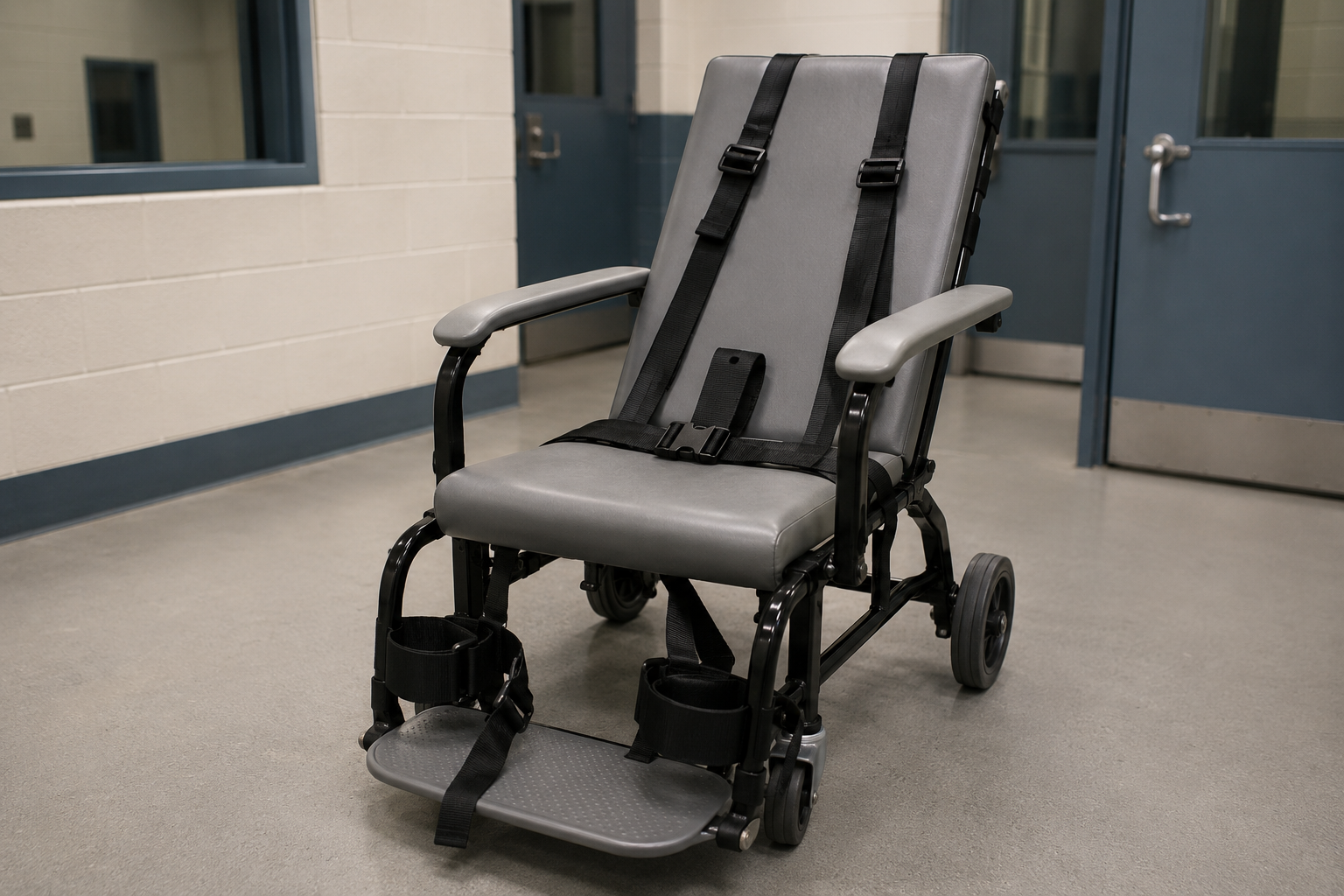
Shield Thursdays: Managing High-Risk Detainees: The Proper Use of Restraint Chairs
Restraint chairs remain one of the most effective — and most scrutinized — tools available to jail staff managing high-risk detainees. When used appropriately, they can help prevent injury, restore order, and protect detainees and staff. When used improperly, they can create serious medical risks, civil liability, adverse publicity, and operational consequences for the agency.
This one-hour Shield Thursday program examines restraint-chair use through the lens of correctional operations, medical risk, supervision, documentation, and liability reduction. The program will focus on the critical questions that arise before, during, and after restraint-chair placement: why the chair was used, whether the restraint remained necessary, how the detainee was monitored, and whether the event was properly documented.
Participants Will Learn:
When restraint-chair placement may be appropriate in a jail setting.
How to distinguish legitimate safety uses from convenience, punishment, or overuse.
Key medical risks associated with restraint-chair use.
Monitoring practices and warning signs requiring immediate intervention.
Supervisor responsibilities before, during, and after placement.
Documentation practices that reduce litigation and administrative risk.
Policy considerations for safer and more defensible restraint-chair use.
Who Should Attend
This program is designed for sheriffs, jail administrators, command staff, correctional supervisors, correctional officers, medical and mental health personnel, risk managers, county counsel, and agency attorneys responsible for jail operations, custody safety, policy development, and liability reduction.
Presented by:
Mitch Lucas
Mitch Lucas is a nationally recognized corrections expert and retired Assistant Sheriff with extensive experience in jail operations, correctional leadership, use of force, restraint practices, inmate management, and detention-facility risk reduction. He has trained and consulted nationally on jail operations and correctional best practices and serves as faculty for Shield Public Safety Training.

Shield Thursdays: July 30, 2026—Beyond Compliance: MAT Access, ADA Considerations, and Continuity of Care in Correctional Settings Legal Exposure, Operational Realities, and Strategies That Work
Correctional administrators and law enforcement executives are navigating an increasingly complex legal and operational landscape around substance use disorder treatment — one where the legal obligations are real, the liability exposure is significant, and the operational questions often don't have easy answers.
This Shield Thursdays session cuts through the complexity. Presenter Kathleen Totemoff, Founder and President of iEXIST, LLC, draws on direct experience managing MAT programs and SAMHSA-funded initiatives to help corrections staff understand what the law requires, what good operations look like, and what tools and strategies are available to help their agencies get it right.
In this session you will:
Understand the ADA obligations applicable to MAT/MOUD access in correctional settings — and the legal risk created by non-compliant policies
Identify the core operational considerations corrections staff must address, including medication security, intake screening, documentation, and continuity of care
Learn a pre-release planning approach that reduces post-release overdose risk and return contacts with law enforcement
Discover partnership models and technology-enabled tools that support continuity of care and reentry outcomes
This session is designed for everyone who works in corrections including sheriffs, jail administrators, command staff, internal affairs commanders, jail medical staff, mental health staff and agency counsel.
Registration: $49
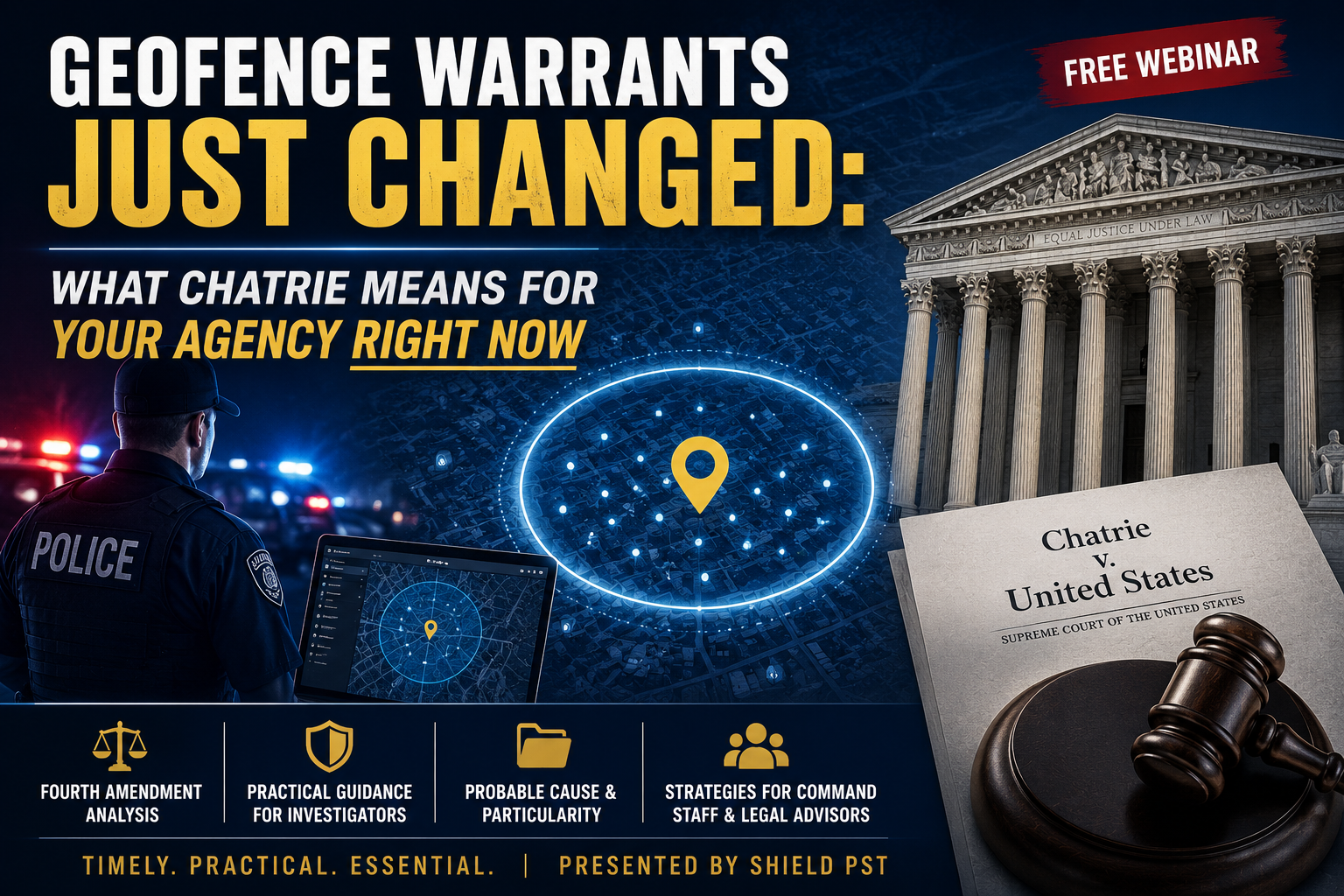
After Chatrie: What the Supreme Court's Geofence Warrant Decision Means for Your Agency
After Chatrie: What the Supreme Court's Geofence Warrant Decision Means for Your Agency
$0.00 Tuition Free
The Supreme Court's decision in Chatrie v. United States is the most significant Fourth Amendment ruling on digital surveillance in years — and it directly affects how your agency investigates crime.
In Chatrie, the Court addressed for the first time whether a geofence warrant — a court order directing Google to identify every cell phone near a crime scene during a specific time window — constitutes an unreasonable search under the Fourth Amendment. The answer will reshape how law enforcement uses location data, how investigators build probable cause for geofence applications, and how agencies respond to challenges at suppression hearings.
In this free webinar, Shield PST Founder and President James "Jeb" Brown, Esq., will break down:
What the Court decided and why it matters
The Fourth Amendment framework going forward for geofence warrant applications
The third-party doctrine after Carpenter — and where Chatrie fits
Probable cause and particularity requirements under the new standard
Practical implications for investigators, agency counsel, and command staff
Whether your agency uses geofence warrants regularly or has never applied for one, Chatrie sets the rules of the road for digital location surveillance. Don't miss this timely, practical analysis from a seasoned police legal advisor.
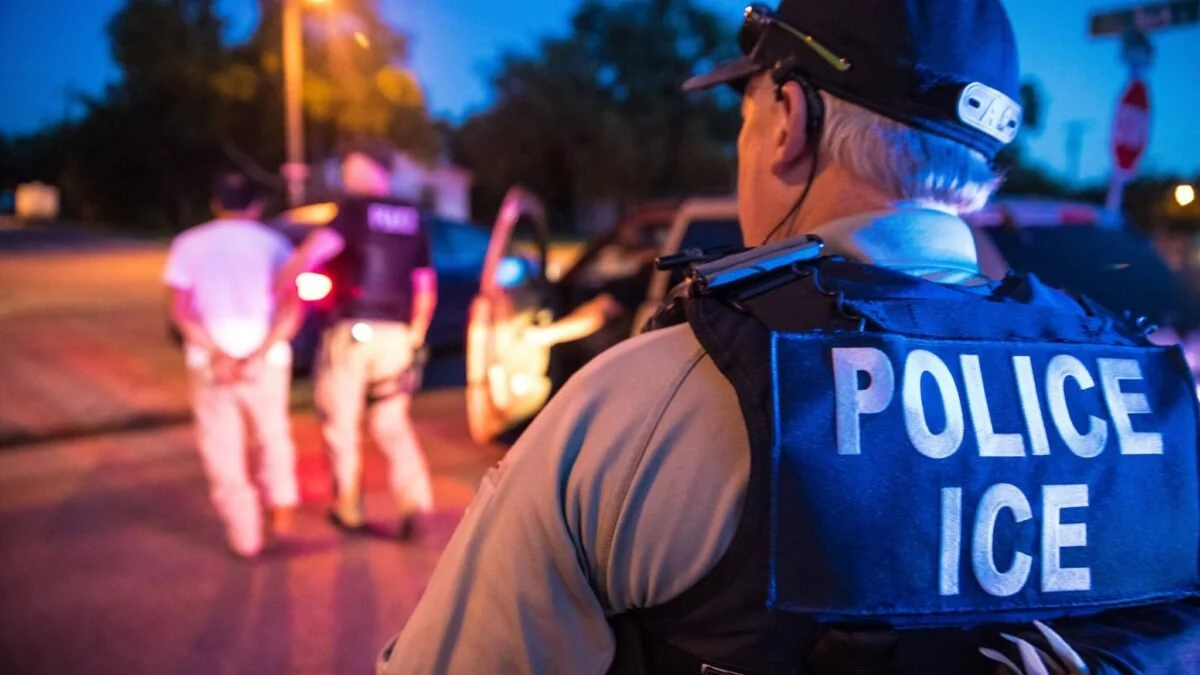
Shield Thursdays: June 25, 2026 - ICE and Local Law Enforcement: A Practical Overview of Federal Immigration Law and ICE Operations
ICE and Local Law Enforcement: A Practical Overview of Federal Immigration Law and ICE Operations
June 25, 2026
9:00PDT | 12:00 PM EDT
Presented by Sam Hall, Esq.

Federal immigration enforcement activity is at historic levels — and local law enforcement agencies are caught at the intersection of competing legal obligations, federal pressure, and significant civil liability exposure. This presentation provides a comprehensive overview of how U.S. Immigration and Customs Enforcement (ICE) conducts enforcement activities within communities and how those operations intersect with local jurisdictions. The discussion will also focuses on ICE’s partnerships with local law enforcement agencies. Attendees will gain insight into the legal frameworks that govern these relationships—such as 287(g) agreements, detainer practices, and information‑sharing mechanisms—and the practical considerations that arise when federal and local authorities coordinate enforcement efforts. The presentation also highlights areas where local governments may encounter operational or legal friction, offering guidance on navigating those challenges. The session further reviews key pending litigation involving ICE operations, including cases addressing detainer authority, constitutional claims, and disputes over federal–local cooperation.
Participants Will Learn:
How ICE conducts enforcement operations within local communities.
The legal framework governing 287(g) agreements, detainers, and information-sharing.
How federal and local agencies coordinate immigration enforcement efforts.
Operational and legal challenges that can arise during federal-local cooperation.
Key pending litigation affecting ICE operations and local government involvement.
Constitutional and legal issues surrounding detainers and enforcement practices.
Best practices for communicating with stakeholders, elected officials, and the public.
Strategies for maintaining transparency while meeting legal and operational obligations.
Who should attend
This program is designed for law enforcement executives, command and supervisory staff, internal affairs commanders, jail administrators, and agency counsel responsible for policy development and constitutional compliance.
Presented by:
Sam Hall, Esq.
Partner, Crivello, Nichols & Hall S.C.
Sam Hall is a partner at Crivello, Nichols & Hall S.C., one of the Midwest's premier law enforcement defense and civil rights litigation firms. He represents law enforcement agencies and officers in federal civil rights actions and provides legal counsel on constitutional compliance, use of force, and agency policy. Sam is co-faculty for Shield PST's Use of Force in Transition Symposium (Green Bay, July 2026).

Shield Thursdays: May 28, 2026 - Current State of Qualified Immunity
The Current State of Qualified Immunity
May 28
9:00PDT | 12:00 PM EDT
Presented by Neil Okazaki, Esq.
Qualified immunity remains one of the most significant — and most debated — doctrines affecting law enforcement officers and the agencies they serve. Courts continue to refine its contours, while legislatures across the country evaluate statutory reforms that may expand, limit, or eliminate its protections.
In this focused, one-hour Shield Thursdays webinar, Neil Okazaki, Esq. provides a clear, practical explanation of qualified immunity, how it operates in federal civil rights litigation, and how recent judicial and legislative developments are reshaping the landscape.
Participants Will Learn:
The legal foundation and purpose of qualified immunity
How the “clearly established law” standard is applied in use-of-force and arrest cases
The two-step analysis courts use in §1983 litigation
Recent federal circuit and Supreme Court trends including the recent case, Zorn v. Linton
State-level statutory changes affecting officer liability
Practical implications for policy, supervision, and risk management
This session is designed for chiefs, command staff, supervisors, internal affairs investigators, municipal attorneys, and risk managers who must understand how qualified immunity impacts operational decision-making and civil exposure.
Shield Thursdays delivers concise, legally rigorous training for public safety leaders navigating an evolving liability environment.
If your agency is concerned about litigation risk, officer protection, or evolving accountability standards, this webinar is essential.

Shield Thursdays: April 30, 2026 - Less Lethal Deployment: Reducing Risk and Enhancing Outcomes
Less Lethal Deployment: Reducing Risk and Enhancing Outcomes
April 30
9 AM PST | 12:00 PM EST
Presented by A. David Berman
Less lethal munitions are critical tools in modern law enforcement — but their effectiveness depends on lawful deployment, proper selection, training, and clear policy guidance.
In this one-hour Shield Thursdays webinar, A. David Berman provides a practical, legally grounded overview of commonly deployed less lethal systems and the constitutional standards governing their use. This session will bridge tactical decision-making with use-of-force jurisprudence, risk management, and policy development.
Participants Will Learn:
The major categories of less lethal munitions (impact projectiles, chemical agents, specialty rounds, and more)
When deployment is tactically appropriate — and when it is not
Fourth Amendment reasonableness standards governing less lethal force
Civil liability exposure and risk mitigation best practices
This program is designed for chiefs, command staff, supervisors, use-of-force instructors, tactical team members, and municipal attorneys advising law enforcement agencies.
Shield Thursdays delivers focused, operationally practical, legally defensible training for today’s public safety professionals.
If your agency deploys less lethal tools — or is considering expanding its capabilities — this webinar is essential.

Shield Thursdays: March 26, 2026 - The Fourth Amendment & Emerging Technologies
March 26, 2026
Noon PST | 3:00 PM EST
Presented by Jeb Brown, Esq.
Artificial intelligence. Geofence warrants. Cell-site simulators. Facial recognition. License plate readers. Body-worn camera analytics.
Emerging technologies are redefining investigations — and reshaping Fourth Amendment doctrine.
In this focused, one-hour Shield Thursdays webinar, we examine how courts are applying constitutional search-and-seizure principles to modern investigative tools. Participants will receive a practical analysis of Supreme Court precedent, federal circuit trends, and operational risk considerations for agencies deploying advanced technology.
Participants Will Learn:
How Carpenter, Riley, and related precedent apply to emerging technologies
The constitutional implications of AI-assisted investigations
Warrant requirements in digital privacy cases
Litigation exposure and civil liability trends
Policy drafting and training strategies to mitigate risk
This program is designed for chiefs, command staff, supervisors, investigators, public information officers, and municipal attorneys responsible for ensuring constitutionally sound deployment of technology.
Shield Public Safety Training delivers legally grounded, operationally practical instruction for modern public safety leaders.
Shield Thursdays: First Amendment and Public Demonstrations
Virtual webinar with Shield President, Jeb Brown, discussing first amendment and public demonstrations