

 Image 1 of 1
National Correctional ADA Symposium
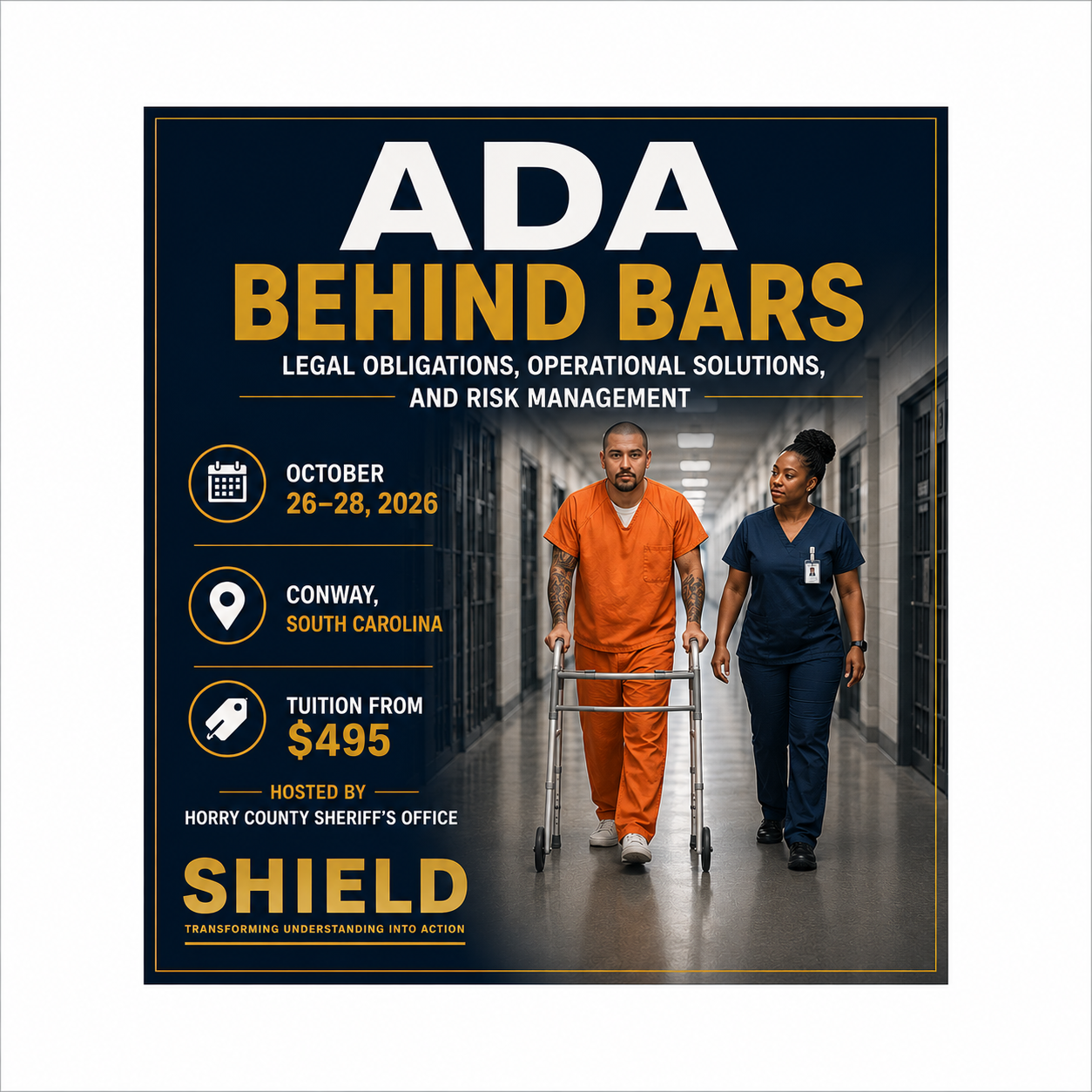
ADA Behind Bars
Legal Obligations, Operational Solutions, and Risk Management
Hosted by the Horry County Sheriff’s Office at the J. Reuben Long Detention Center
Conway, South Carolina 29526
The Americans with Disabilities Act affects nearly every area of jail operations, including intake, classification, housing, discipline, medical and behavioral-health care, medication-assisted treatment, restrictive housing, use of force, communication access, grievances, emergency planning, release planning, and vendor oversight. ADA Behind Bars is an intensive 2.5-day symposium designed to help correctional professionals understand those obligations and translate them into practical, defensible operational systems.
Event Details
- Monday, October 26: 8:00 a.m.–5:00 p.m.
- Tuesday, October 27: 8:00 a.m.–5:00 p.m.
- Wednesday, October 28: 8:00 a.m.–12:00 p.m.
-
Location:
Horry County Sheriff’s Office: J. Reuben Long Detention Center
4150 J. Reuben Long Ave.
Conway, South Carolina 29526 - Instructional format: 2.5-day, in-person symposium
- Enrollment: Limited to the first 50 attendees
Registration Includes
- Admission to all symposium sessions
- Lunch on October 26 and October 27
- Electronic training materials provided before the conference
- Certificate of completion
- Faculty question-and-answer sessions
- Comprehensive correctional ADA Self-Assessment
- Individualized Shield analysis and written report based on the completed self-assessment
- 30-minute telephone consultation to discuss the self-assessment findings and potential next steps
- Exclusive attendee access to Shield’s ADA Behind Bars Resource Library
Tuition
-
$495Early-bird registration
Available through September 11, 2026 -
$595Regular registration
Beginning September 12, 2026 -
$425 per attendeeAgency rate
Available when three or more attendees from the same agency register
Agency-rate registrations should be submitted together or clearly identify the participating agency.
More Than 2.5 Days of Training
ADA Behind Bars is designed to provide attendees with tools they can continue using after the live symposium. Registration includes two significant post-conference resources designed to help agencies evaluate and strengthen ADA compliance.
Individualized ADA Self-Assessment
Attendees receive a comprehensive correctional ADA Self-Assessment. After the completed assessment is returned to Shield, the information will be analyzed and an individualized written report will be prepared to help identify areas of strength, potential gaps, and issues deserving additional attention.
Exclusive ADA Resource Library
Attendees also receive exclusive access to Shield’s correctional ADA Resource Library containing checklists, templates, sample documents, practical compliance tools, and other materials designed to assist agencies with ADA compliance and implementation.
Included With Registration
ADA Behind Bars Self-Assessment, Individualized Report & Consultation
Attending the symposium is only the beginning. Each attendee will receive a comprehensive correctional ADA Self-Assessment designed to help evaluate how the attendee’s agency currently addresses ADA requirements throughout its detention operations.
The assessment examines important operational areas where disability law and correctional practice intersect. It can help agencies identify practices that are working well while also identifying policies, procedures, training, documentation, or operational systems that may deserve further review.
After the completed self-assessment is returned to Shield Public Safety Training, Shield will analyze the information and prepare an individualized written report based on the agency’s responses.
The process includes:
- A comprehensive correctional ADA Self-Assessment addressing critical areas of jail and detention operations;
- Review and analysis of the completed assessment by Shield Public Safety Training;
- An individualized written report addressing the agency’s responses;
- Identification of existing strengths, potential gaps, and areas deserving further review;
- Practical observations designed to help the agency prioritize its ADA compliance efforts; and
- A 30-minute telephone consultation to discuss the results, answer questions, and review potential next steps.
Exclusive ADA Behind Bars Resource Library
Symposium attendees will also receive exclusive access to Shield Public Safety Training’s correctional ADA Resource Library.
The library is designed to help attendees translate what they learn during the symposium into practical agency operations. Resources include:
- ADA compliance checklists;
- Operational and administrative templates;
- Sample documents;
- Practical tools to assist with evaluating ADA compliance;
- Resources to assist with policy and procedure review;
- Materials to assist agencies with accommodation processes, documentation, training, and implementation; and
- Additional correctional ADA resources for continued use after the symposium.
Access to this resource library is reserved for ADA Behind Bars attendees.
What Participants Will Learn
- How ADA Title II applies to jails and detention facilities
- How disability-related needs should be identified during intake and classification
- How to distinguish disability-driven conduct from intentional noncompliance
- How to evaluate requests for reasonable modifications
- How the ADA affects discipline, restrictive housing, suicide prevention, and use of force
- How to address medication-assisted treatment and opioid use disorder
- How to improve communication access for inmates with sensory disabilities
- How ADA Coordinator responsibilities, grievance procedures, and staff training fit together
- How healthcare-vendor practices affect agency exposure
- How to prioritize corrective action and strengthen institutional compliance
Curriculum Overview
Monday, October 26 | 8:00 a.m.–5:00 p.m.
- ADA Title II in correctional settings
- Intake, screening, and the first 24 hours
- Classification systems and disability-related decision-making
- Physical access and mobility disabilities
- Intellectual and developmental disabilities and traumatic brain injury
- Mental illness, psychiatric disabilities, and the ADA
- Faculty question-and-answer session
Tuesday, October 27 | 8:00 a.m.–5:00 p.m.
- Restrictive housing, solitary confinement, and use of force
- Suicide prevention and crisis response
- Disciplinary systems and the ADA
- Medication-assisted treatment and opioid use disorder
- Emergency planning, release planning, and reentry
- Deaf, hard-of-hearing, and visually impaired inmates
- Faculty question-and-answer session
Wednesday, October 28 | 8:00 a.m.–12:00 p.m.
- DOJ investigations, private litigation, and the enforcement landscape
- Individual Accommodation Plans and the interactive process
- ADA Coordinator authority and grievance procedures
- Healthcare vendor management
- Corrective action and building a compliant system
Who Should Attend
This symposium is designed for professionals who manage, advise, insure, defend, evaluate, or oversee correctional operations, including:
- Sheriffs, jail administrators, detention-center directors, and command staff
- Correctional supervisors, intake personnel, and classification personnel
- ADA coordinators and compliance professionals
- Medical, mental-health, and behavioral-health professionals
- Agency counsel, county attorneys, and civil-rights attorneys
- Risk managers and insurance pool representatives
- Claims professionals, litigation managers, and loss-control personnel
- Internal affairs, professional standards, training, and policy personnel
- Healthcare-vendor managers and government officials responsible for detention operations
Why Risk Managers and Insurance Pool Representatives Should Attend
Correctional ADA failures can create overlapping exposure under Title II of the ADA, Section 504 of the Rehabilitation Act, constitutional standards, civil-rights statutes, and contractual obligations. This program will help risk and insurance professionals better understand:
- The operational practices that generate recurring disability-related claims
- The relationship between ADA issues and use-of-force incidents
- The risks created by intake, classification, discipline, and restrictive housing decisions
- The exposure associated with healthcare and behavioral-health vendors
- The role of training, supervision, policy, and documentation in claim defensibility
- How corrective action can reduce litigation and long-term loss exposure
Faculty
ADA Behind Bars brings together professionals with experience in law, jail administration, correctional operations, disability compliance, risk management, policy, and training.
Faculty assignments and program sequencing are subject to change.
Lunch and Electronic Materials
Lunch will be provided on Monday, October 26, and Tuesday, October 27. All training materials will be distributed electronically before the conference. Attendees should provide an accurate email address during registration and bring a laptop or tablet if they wish to access the materials during the program.
Facility and Security Information
This training will be conducted at an operational detention facility. All participants must comply with the security procedures established by the Horry County Sheriff’s Office and the J. Reuben Long Detention Center. Registered attendees will receive arrival, parking, identification, prohibited-item, and facility-entry instructions before the event.
Accessibility
Shield Public Safety Training is committed to providing an accessible training environment. Participants requesting an accommodation should identify the requested accommodation during registration or contact Shield Public Safety Training sufficiently in advance of the symposium.
Reserve Your Place Early
Enrollment is limited to the first 50 attendees. Registration will close when capacity is reached, so agencies and individual attendees are encouraged to secure their places as early as possible.
Early-bird tuition of $495 is available through September 11, 2026.
Faculty assignments and program sequencing are subject to change. Questions may be directed to staff@shieldpst.org.