

September 17, 2026 · Tuition Free
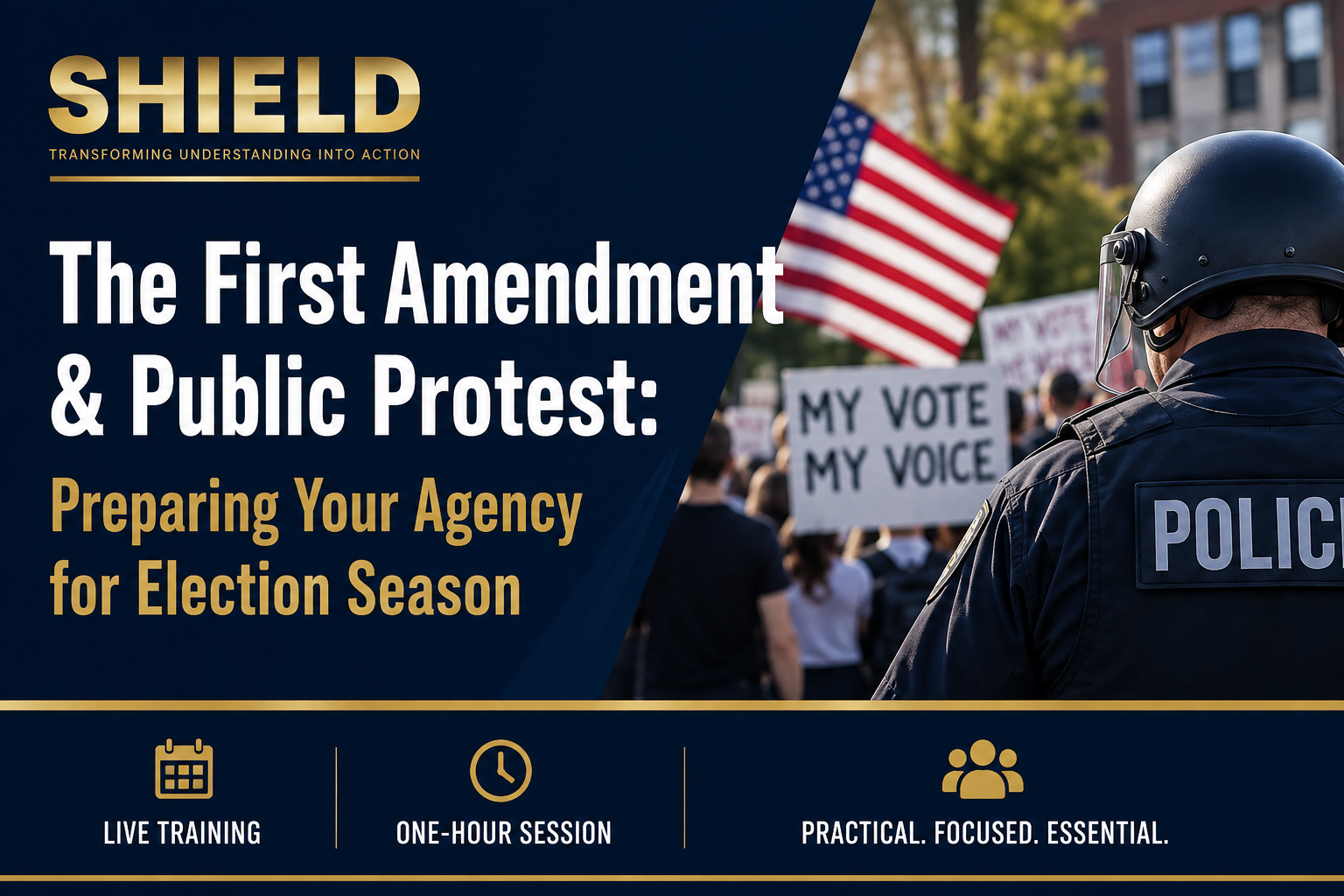
The First Amendment & Public Protest: Preparing Your Agency for Election Season
With the November election approaching, agencies nationwide should expect a rise in campaign rallies, counter-demonstrations, polling-place activity, and post-election protest — and with it, a rise in First Amendment liability exposure. A single mishandled protest during election season can generate national media attention, DOJ scrutiny, and civil litigation that follows an agency for years.
This one-hour training, presented by Shield President Jeb Brown, Esq., delivers a focused, practical overview of the constitutional framework governing protest policing and the specific issues election-season demonstrations tend to raise: content-neutral enforcement, counter-protester management, retaliatory arrest exposure, lawful dispersal, mass-arrest decisions, and documentation.
Election-related demonstrations present particularly difficult operational challenges because officers are often required to make rapid decisions while opposing groups, political candidates, media representatives, observers, and members of the public are all exercising constitutionally protected rights in the same environment. The legal consequences of inconsistent enforcement can be significant.
This program focuses on helping agencies distinguish between protected expression and conduct that may lawfully be restricted, while also identifying the policies, supervisory practices, and documentation that can reduce unnecessary constitutional exposure.
Participants Will Learn
- The constitutional framework governing speech, assembly, and protest at rallies, polling places, streets, sidewalks, and government buildings
- How the public-forum doctrine affects an agency's ability to regulate the time, place, and manner of demonstrations
- Why content neutrality is essential — and how selective enforcement can create immediate First Amendment liability
- How to distinguish permissible public-safety restrictions from restrictions based on the message, viewpoint, or identity of the speaker
- The retaliatory-arrest standard after Nieves v. Bartlett and Gonzalez v. Trevino, and why enforcement consistency and officer decision-making matter
- How to lawfully manage counter-protesters without creating a constitutionally impermissible heckler's veto
- The legal considerations surrounding protest zones, buffer areas, pedestrian restrictions, street closures, and separation of opposing groups
- When dispersal may be appropriate and what agencies should consider before issuing a dispersal order
- The importance of clear warnings, reasonable opportunity to comply, command authorization, and documentation before enforcement begins
- Legal and operational considerations associated with mass arrests during election-related demonstrations
- Why contemporaneous documentation, video preservation, command decision logs, and enforcement consistency can become critical evidence in subsequent litigation
Why This Matters Now
Election season creates an unusually compressed environment for constitutional decision-making. Agencies may encounter campaign events, political rallies, demonstrations near government facilities, counter-protests, election-related marches, activity near polling locations, and rapidly developing demonstrations following election results.
These incidents can draw intense public and media scrutiny. Decisions involving arrests, dispersal, crowd separation, protest restrictions, or differing treatment of opposing groups may later be examined frame by frame in litigation. Preparation before the event is therefore as important as the decisions officers make in the field.
Who Should Attend
This program is designed for police chiefs, sheriffs, command staff, patrol officers, patrol supervisors, field force members, tactical team members, internal affairs commanders, public information officers, agency trainers, risk managers, and municipal or agency counsel responsible for election-season planning, protest response, and constitutional compliance.
Presented By
James E. “Jeb” Brown, Esq.
President, Shield Public Safety Training; attorney representing law enforcement agencies for more than 30 years.